Introduction:
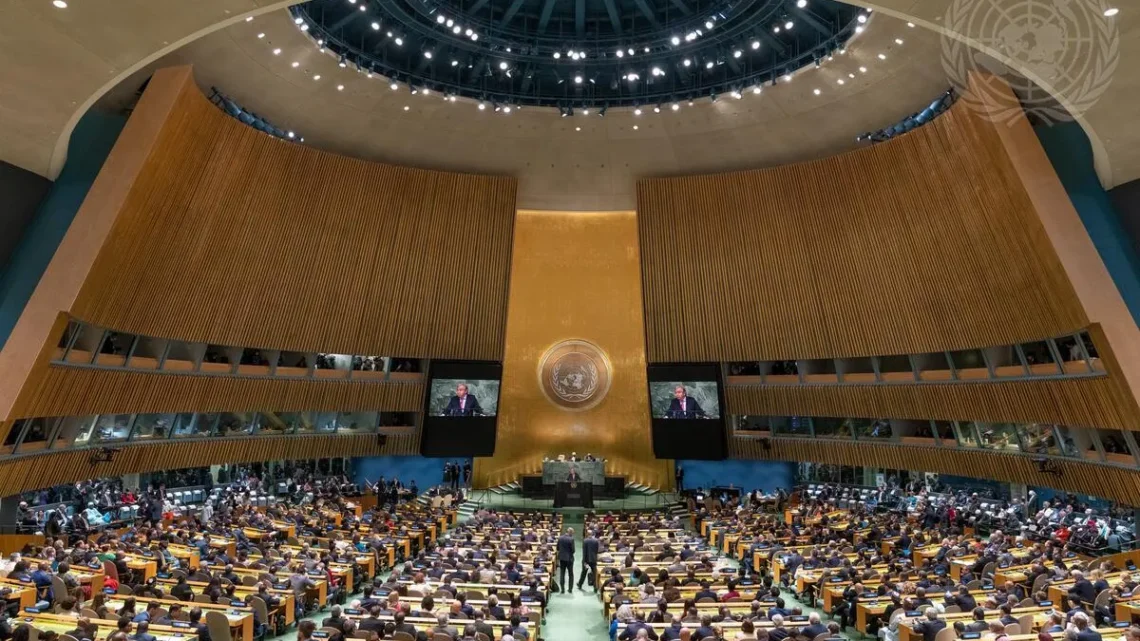
Recently, African member-states of the United Nations (UN) have been asserting themselves by actively debating issues of global governance, resources exploitation and imbalanced socioeconomic policies framed and imposed on them by the Bretton-Woods institution, rendering them dependent on western economic system to perpetuate their perennial status of poverty. As an example of such assertiveness, Ghana tabled a resolution at the UN demanding that adequate reparation, including a formal apology should be rendered by western countries, especially US and European countries to Ghana, African countries and other developing states which suffered the effects of slave trade and slavery-related crimes. Whilst Ghana’s resolution gained recognition by attracting the highest votes, a similar resolution has also been tabled by Togo’s foreign affairs minister, Robert Dussey, demanding that western states stop using Mercator map in educating students because it projects the African continent smaller than its proper size. Although Togo’s resolution attracted 164 votes at the UNGA, this blogpost argues that African States’s obsession of tabling resolutions at the UN will not secure them power, influence or respect at the global until they have developed their economics and political frameworks individually and collectively with little reliance on foreign states. Framing every African problem through the instrument of UNGA resolution is susceptible to diluting the potency of this useful diplomatic strategy which plays vital a role in holding the international community together. With that background, this post explores the functions of the Mercator map, Togo’s domestic socio-political developments in respect of the UN Charter and the comic-relief stance characterising Togo’s resolution.
The Mercator Map/Projection
The Mercator map/projection (Mercator) was popularised by a Flemish geographer called Geralds Mercator in 1569. Primarily, the Mercator was instrumentalised to present both the north-south on a map by maintaining its original shapes and angles to facilitate navigation purposes. Among other usefulness of the Mercator are its ability to enhance direction of navigation because it corresponds to the compass at a constant straight-line. It assists sailors and navigators because of its simplicity of usage; and it is easy to construct and has versatile applications because people can use it for small, large scale and different purposes. Conversely, the Mercator also represents disadvantages as follow: it distorts the actual size of a landmass as one move closer to the poles. This disadvantage must have motivated Togo’s resolution at the UN recently. It can also make countries nearer to the Equator appear smaller than their actual size thus creating wrong impression of the country/region to the international community. Furthermore, the Mercator is unable to show the accurate size of the earth’s surface and shape. With these advantages and disadvantages of the Mercator and many other limitations of existing maps and their geographical instruments, Togo’s resolution at the UN is needless because anyone with basic knowledge of geography knows the fact that African is the second biggest continent with the largest natural resources in the world. However, being the second largest continent with the largest resources will not transform a continent as the richest, influential and respectful in the world unless its leadership mobilises them with intentional purpose and altruistic devotion to achieve same. So, Monsieur Dussey, tell the President of Togo to reform the socio-political architecture of your country as well refrain from his dictatorial tendencies to bring economic and political freedom to the Togolese; then Africa’s size would be recognised by the global world beyond the Mercator projection.
Togo’s Socio-political Status under UNGA and UN Charter
Togo is a small country located on the Gulf of Guinea in West Africa bordered by Ghana in west, Benin in the East and Burkina-Faso to the North with a population 9.14 million people. After being a protectorate of the British colonial administration for years, it became a French colony after world war I but gained independence on 27 April 1960 under Sylvanus Olmpio as its first president. Motivated by greed and power, a group of coup plotters -Emmanuel Bodjolle, Etienne Eyadema and Klebber Dadjo- assassinated Olympio in front of the American embassy on 13th January 1963 in Lome. Later, Etienne Eyadema emerged as a leader of Togo and changed his name to Gnassingbe Eyadema. (Eyadema I) ruled Togo as a despot for four decades by imposing harsh rules that deprived opposition parties and the citizenry freedom of speech, freedom of assembly as well as assigned infiltrators and informants in public and private spaces to arrest and jail anyone who dare to criticise him or oppose his policies until his death in 2005. After his death, his son, Faure Eyadema assumed the reins of power to continue in office as dynastic despot. As a strategy to consolidate the dynastic rule of his father, Faure Eyadema (Eyadema II) has changed Togo’s constitution with the connivance of majority of his ruling party-Union for the Republic -(UNIR) to gain a vote of 87 to zero, to confer on him a presidential term without a limit, thus denying the citizen’s right to vote for the country’s leader democratically. This penchant for self-entrenchment as president is a key contributing factor in diminishing Africa’s status at the global plane rather than a Mercator map. One would have expected the Togolese foreign minister to table a resolution soliciting for the international community’s help to reform this dynastic regime rendering millions of Togolese to squalor and misery. The UN Charter and UNGA resolutions have one common objective that enjoin heads of states, including Togo’s President, to provide good governance undergirded by favourable socio-economic polices to promote human dignity. However, the converse is the case in Togo. Thus, global financial institutions have rated Togo among the poorest of the least developed countries in the world with endemic corruption among every facet of public institutions, officials and its workers. Unemployment is rife creating adverse socio-economic vices teasing young women into brazen prostitution and young men engaging theft and related crimes for sustenance. With just a population of 9.14 million people, any conscientious leader with vision, patriotism and good-will, must be able to gender creative policies to build effective socioeconomic framework to address the people’s welfare as to boost the growth and development of the country, and not call for a Mercator map to recognise the actual size of Africa. How would any Togolese benefit from the recognition of Africa’s actual geographical size on a map? The socioeconomic and political miseries facing the good people of Togo render not only the Mercator resolution useless but also brand majority of African states at the UN as comic relief stand. Afterall, Togo and its government have violated every provision of the UN Charter and international treaties to which it has appended its signature by treating its citizenry viciously.
The Comic-Relief Stand
Indeed, the UN is a global avenue to debate, engage and find common solutions to address challenges affecting the peoples of the international community. However, some resolutions tabled by African states thus far, particularly the recent one sponsored and tabled by Togo’s foreign minister is nothing more than a comic relief. This is because there are pressing challenges – economic, social, political and cultural – that aggressively violate and restrict the human rights of Togolese which the minister should promoted at the UN; yet, he chose to brand himself by tabling a resolution which adds nothing concrete to improve the worth and dignity of his people. The continuous ‘abuse’ of UN resolutions by African states in this manner would dilute the potency of UNGA resolutions because the UN is constantly threatened by some powerful states and institutions for making feeble decisions; therefore, it must not entertain every frivolous issue to be framed as resolution to save its remaining bruised image.
Final Remarks
Yes, Africa is the second biggest continent with the largest resources in the world. Every average person with a little knowledge of geography knows this fact. However, to gain global recognition reflecting that image will not be achieved by a UN resolution but by dint of hard work anchored in a visionary leadership committed to domestic creative policies, selfless leadership, sacrifice and patriotism aimed at uplifting every citizen within nation-states and throughout the continent. No vote size on a UN resolution will do. So, the Togo’s foreign minister must learn this lesson and pass it onto his president, and the African Union and Africa will begin to gain positive international recognition.