Introduction:
The English Dictionary defines the term “comity of nations” as an “association of nations for their mutual benefit, mutual recognition by nations of the laws and customs of others”. In international law, this principle operates fairly in deliberations of the United Nations General Assembly, (UNGA), United Nations Security Council (UNSC), International Court of Justice (ICJ), International Human Rights Courts (IHRC) as well as other international organisations in pursuance of diplomatic relationships and global governance. However, over the decades, the five permanent member states of UNSC– Britain, China, France Russia and the USA – have selectively, expediently and selfishly manipulated the principle to achieve geopolitical objectives satisfactory to them. Also, African states, especially Ghana, and other developing states dotted around the globe have not benefited mutually from this principle because these developing states have been marginalised and not treated as equal in status with the permanent five on the global plane in economics, politics, sociocultural and technological spheres. Against that background, this post first provides commentary on the statement of Ablakwa not as criticism but to offer suggestions to guide Ghana; and second the African continent to frame and implement strategic policies to gain recognition as substantive members of the international comity.
Ghana’s Rightful Place in the International Comity?
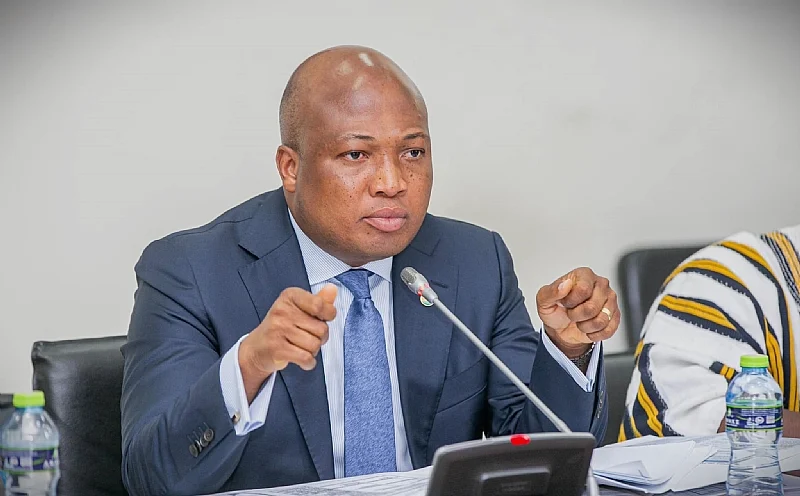
On 4th February 2026, President John Dramani Mahama (Mahama) paid a state visit to the Republic of Zambia with a view to deepening bilateral trade relationship between the two states as engine of socioeconomic growth. Prior to President Mahama’s speech to the Zambian officials, the foreign minister of Ghana, Samuel Okudzeto Ablakwa, had the opportunity to make some remarks during which he recounted series of invitations flooding the Ghanaian foreign office, requesting president Mahama to attend functions as guest speaker with the United Arab Emirates and Middle Eastern countries by offering him free Jet-rides without Ghana paying a pesewa. Similarly, on that occasion, Ablakwa echoed that “Ghana has regained its rightful place among comity of states.” Certainly, Ghana has been and is enjoying doses of good-will among its peers in the African region and partially on the international plane. However, in the opinion of this post, receiving free-jet rides to deliver speeches as guest speaker cannot be associated with substantial rightful place among the comity of nations due to the following factors. First, society can misconstrue the president’s acceptance of those jet-rides as a sedative strategy in luring the country’s negotiation power and officials to accept deals and agreements harmful to the people of Ghana. Also, it reflects the status-quo that reinforces the dependency culture of Ghana and other developing-states on foreign assistance. Furthermore, it mirrors security concerns and sentiment which might compromise national security by exposing the president and his officials to espionage. These propositions may seem infantile in certain security quarters; however, precedents established by historical accounts and actions lend credence to the fact that heads of developing states and Africa had/have over-relied on foreign good-will at their peril. Examples of Assad of Syria, Saddam Hussain and recently Maduro of Venezuela affirm the point. While Ghana’s political and socioeconomic architecture is feebly dependent on external sources, this post proclaims to the Ghanaian government and foreign ministry that, “Ghana’s rightful place among comity of nations” is gathering force, but not so fast.
But not so Fast
Under Mahama’s presidency, Ghana is gradually renewing bilateral and multilateral relations with estranged African countries and other multilateral agencies in the hope of stabilising the socioeconomic and political fabric of the country. However, that path should be tread cautiously with a careful strategic security objective to achieve sustainable development devoid of extensive reliance on foreign sources. Although politics and politicians thrive on favourable public perception, there is a limit to the effectiveness of that strategy as well. Therefore, Ghana’s rightful place in the ”international comity” can only be achieved substantively by building strong domestic political, economic, social, technical and cultural bulwark against which the teeming youth will gain open access to job opportunities without paying bribes; expedite dispensation of judicial justice to retrieve looted state funds from people in and out of government without hiding under due process and procedure; dealing decisively to restore dignity to the marginalised without fear of suffering political defeat, especially old women ,grandmothers and fathers being branded as witches; and lastly, building national agricultural facilities to feed the people with little / no dependence on foreign sources. That is one easy avenue of gaining rightful place among the comity of nations.
Final Remarks
Gaining rightful place among the comity of nations is a work-in progress under Mahama’s Ghana; however, there are copious distractions such as free-jet rides which could distort and sway the government and its people off-strategy. Thus, the government should focus on growing domestic economic resilience to establish absolute and competitive advantages of local sectors to engage regionally and globally. Until then, the watch word is not too fast.