
Introduction:
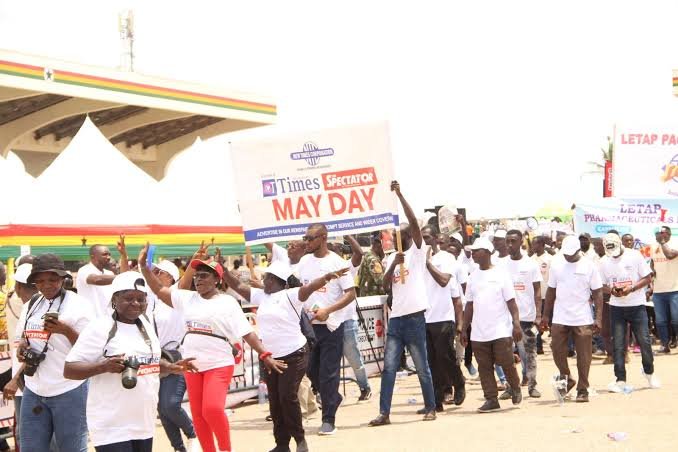
The International Labour Day (Labour Day) is celebrated by the world community on 1st May of each year as a public holiday to commend the dedication and achievements of workers’ contribution to human society. This year, from its headquarters in Geneva, Switzerland, Guy Ryder, the Director-General of the International Labour Organization (ILO), delivered a good-will message to all workers, calling on governments of member-states of the ILO to promote the welfare of their workers with a view to maximising productivity while reducing socioeconomic threats eviscerating human dignity, including global poverty. Ryder also emphasised that the May-Day celebration underlines key ideals such as “unity, freedom of work and collective action to uphold social justice and solidarity within national borders and across regions.” With that background, this post briefly explores the significance of the May-Day celebration, including strategies, which the Ghanaian government should adopt to commend the informal workers in a spirit of solidarity as well as mainstreaming them to contribute regularly towards national revenue mobilisation through efficient but humane taxation scheme.
What are the Benefits of the ILO for Contemporary Employment Relations?
The International Labour Organization (ILO) founded in 1919 by the international community as part of the Treaty of Versailles after-world-war I but later morphed into a specialised organ of the United Nations (UN) in 1946. Principally, it seeks to promote social justice, improve global employment relations, mobilises movement to secure better wages, safer working conditions, eight-hour workday, protection of workers’ rights and prevention of forced labour. With these noble ideals, Ghana has modelled its employment regime on ILO principles to regulate the employment conditions and relations of public servants as well as observation of the ILO standards, including May day celebration. At the climax of the May 2026 celebration, President John Dramani Mahama (Mahama), on behalf of the Ghanaian state, congratulated workers of public agencies and presented various awards to those who had distinguished themselves by rendering exceptional services to the nation and people. However, contrary to the principles of solidarity, unity and social justice, the May day celebration compromised the ideals of the ILO, especially solidarity, because workers in the informal sector were not recognised by the state adequately as integral part of the working force of the state. Undoubtedly, workers in the informal sectors of the Ghanaian society play critical and supporting roles in promoting key socioeconomic activities of the country. Furthermore, in Ghana and the entire continent of Africa, informal workers continue to engage in vital activities which not only support the formal sectors of economics in the sub-region but also contribute to the sustenance of the social fabric of families within states and the region. Thus, it is prudent and economically strategic to recognise their contributions on such a national occasion while strategising to draw them into the tax-collection web. A caveat is worth stating here. Deficiencies in revenue mobilisation must be rectified in Ghana before drawing those informal workers into the tax net and governments- present and future- should devise efficient tax collection mechanism, including severe punishment measures, to dissuade corrupt public officials who have insatiable appetite for stealing from public funds.
A Humane Tax Regime for Informal Workers in Ghana: An Abiding Source of Revenue Collection
Over the centuries, the topic of taxation is/has always been a vexatious matter. In the Holy Bible, countless discourses span taxation and the same is the case in human histories across civilisations of the north and south hemispheres of the globe. Yet no nation or human society on the surface of the earth can thrive to organise its political, social, economic and cultural infrastructures without resorting to taxation of one kind or another. Given Ghana’s economic status and limited sources of revenue to undertake its developmental agenda, it is only fair that some of the regular and active workers in the informal sector -carpenters who undertake large scale industrial activities, masons who build and earn large sums of contract money, fitting shops and related established entities are integrated into the tax scheme; because, some of these entities operate informally; however, they earn decent sums of income on a scale equal to public /government workers. Thus, while it is right and proper to recognise their contribution to the national economy and development, it is also equitable that they must be motivated to pay taxes to the national coffers, but humanely.
Final Remarks
The May day celebration is an endured feat promulgated over the decades with profound significance in recognition of workers’ contribution to society. While the Director-General of the ILO has encouraged national governments to show solidarity with all workers within their states; the Ghanaian state focused on public servants and agencies to the discrimination of informal workers. As a developing nation with limited resources but saddled with infrastructural deficiencies and major developmental agenda, informal workers need encouragement for their keen contributions on this important day as well as encouraged to pay their share of taxes equitably and humanely without encumbering them.


No Comments