Introduction:
The rules-based international order (RBIO) was created under the aegis of the allied powers, with the US as its guarantor, together with peace-loving states across the world, with a view to promoting human rights, dignity, socioeconomic prosperity, through agencies of the United Nations (UN), World Trade Organisation(WTO), International Labour Organisation (ILO), World Health Organisation (WHO) among many useful and like-minded institutions. Despite their fallibilities, the RBIO have played formidable role in steering global affairs with considerable success. However, the recent global power struggles in contemporary international politics, characterised by the US-China debacle, NATO- Ukraine- Russia crisis, Israel-Gaza conflict, Israel- US- Iran war, including dotted geopolitical struggles in Africa and parts of the world- reinforce the premise that the RBIO is gasping away with challenging implications for Africa. With that characterisation, this post first explores events that threatens the RBIO, and secondly the implications of such global tensions for Africa.
The Rules-based International System is Gasping Away
Article 2(4) of the United Nations Charter upholds and promotes peaceful co-existence among states by frowning upon use of force and threat of use of force against the sovereignty of member-states, including overt and covert interference in the internal affairs of any nation that disturbs international peace. However, steeped in brazen self-seeking tendencies devoid of respect for diplomatic relations, President Trump ably supported by the European heads of government, have shelved the rules-based international system by sponsoring conflicts and undertaking activities that fray societal fabric and human dignity. Examples of such gangsterism are copious. while socioeconomic standards are fast falling in US and major European countries, their political leaders are actively mobilising financial and miliary resources to perpetuate wars abroad. Equally, President Trump’s recent abduction of President Nicolas Maduro of Venezeuela and his wife Cilia Flores is not only a testament of destroying the rules-based system but creates a dangerous precedent to embolden skeptics that international law matters very little in the global space. Within academia and diplomatic circles, Trump’s invasion and abduction of Maduro is a grotesque violation of international law as well as gender a precedent to motivate other powerful states and their presidents/prime ministers to overthrow weaker states at whim. Furthermore, Trump’s recent answer to a journalist after the abduction of Maduro, that “only his morality matters in of international law” coupled with his appointee’s comment that “international law is only a nicety” renders the international rules-based system as gasping for life. Moreover, the European states who function as vassal states of the US, especially under Trump’s reigns, have collaborated extensively to undermine the international law regime, as complicit by cowardly refusing to call him out to order. These developments reinforce the premise that might is always right; and signal to the developing countries, especially Africa, of the need to tighten their belt.
Africa, Tighten Your Belt
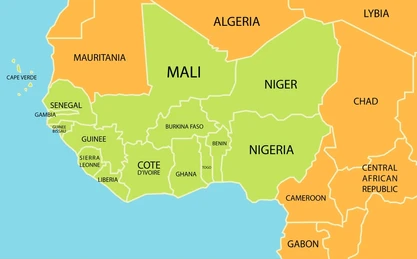
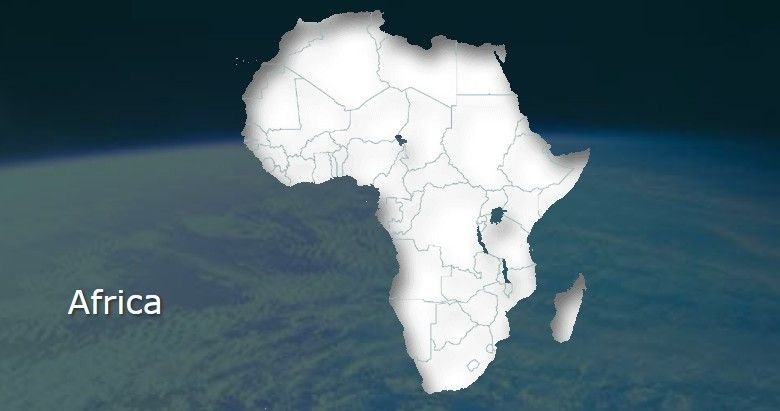
Trump’s recent bombardment of certain places in northern Nigeria under the guise of protecting Christians against terrorism raises questions for which feeble responses were provided. However, it is the opinion of this post that the US is communicating to the African region that the US has the power, influence and military power to bomb African-states into submission without incurring any responsibility. One caveat worth stating here is that under international law, a country could invite an external force to help it curb domestic internal dissent, insurrection or threat. However, that was not the case in Maduro’s abduction because pronouncements by Trump and his secretary of state Marco Rubio and other cabinet members suggest open disdain for international law. African states will do well to serve their citizens and countries humanely and honestly because at their status of development-socioeconomic, political and diplomatically, they stand no chance of defending themselves against American or European intervention at any level. Worst of all, most African states serve as bases for US and European military forces, who often undertake operations that infringe on the sovereignty of these states without substantive reprimand or sanction. This bodes very negatively for Africa and the earlier they look inwardly at building domestic and regional capacities for future generations the smarter. As remarked by Mark Carney at the Davos conference, middle countries- Canada, Korea, Australia, Brazil, Singapore among others – do not matter where global states’ interests are at stake. Carney pointed out, stating “if you are not the menu you are on the menu.” That statement has serious implications not only for middle countries but African states as well. To survive this challenging and tumultuous era, Africa should tighten their belt by diversifying their developmental strategies in discovering multiple sources without reliance on US and Europe. This is achievable by building patriotic regional ties with a focus on individual African states.
Final Words
While the international rules-based system is gasping away under the erratic and disdain behaviour of Trump towards international law, together with his vassal European states, Africa’s surest strategy of holding themselves together is to develop domestic and regional capacity anchored in local expertise. Although building institutions takes time, honing expertise and upscaling structures require patient, but the best time to start the African regional independent project is now. The middle-countries are building partnerships to outwit the US’ aggression. This task will not be easy, but Africa should tighten their belt with altruistic strategy to promote the wellbeing of their peoples.